


Articles
Community Benefit, Financial Assistance, Tax-exempt Status, Setting the Record Straight
Article Misleads on Hospitals’ Charity Care Spending
Learn why it's reckless and wrong to allege that hospitals are deliberately squeezing their charity care spending to maintain financial viability.
Health Insurance
Bias-Riddled “Study” is More Deception Backed by Insurers
A recent paper funded by the objective-sounding organization the “National Institute for Health Care Management (NIHCM) Foundation” adds to the growing list of commercial health insurer-backed, bias-riddled research aimed at diverting attention away from that industry’s troubling practices. This time they claim to have found a link between hospital consolidation and access for people covered by Medicaid.
340B Drug Pricing Program, Setting the Record Straight
340B Analysis Wrong and Irresponsible
Modern Healthcare’s putative report on CMS’ 340B remedy proposal is completely wrong and irresponsible for the following reasons. First, to buttress its conclusions the article relies on quotes from an academic whose 340B research is funded in whole or in part by an organization with an anti-hospital agenda.
Setting the Record Straight, Tax-exempt Status, 340B Drug Pricing Program, Community Benefit
Another Unfounded Attack on Hospitals From The Shadowy Arnold Ventures
A new opinion piece supported by Arnold Ventures and published in the New England Journal of Medicine is another unfair assault on the only sector in health care that routinely gives back so much more to their communities than they receive in tax relief.
Financial Management, Setting the Record Straight
What a Recent Health Affairs Piece Gets Wrong about Hospital Finances and Charity Care
A recently published article in Health Affairs on hospital finances and financial assistance uses a flawed, debunked methodology to justify preconceived conclusions about how hospitals manage their finances.
Setting the Record Straight
Lown Institute Once Again Cherry-Picks Data to Fit their Preconceived Notions about Hospitals
America’s hospitals and health systems do far more than any other part of the health care field to advance health in their communities. The fact is that all hospitals and health systems — regardless of size, location, and type of ownership — are dedicated to not only caring for their patients, but for their entire communities in a wide variety of ways.
Leadership, Surprise Medical Billing
Blog: Why hospitals and physicians are filing suit over No Surprises Act final rules that jeopardize patient access to care
America’s hospitals and physicians filed a lawsuit in an effort to protect patients’ access to critical health care services. At issue is the implementation of the No Surprises Act, legislation that both the AHA and AMA worked vigorously to get enacted in order to protect patients from surprise medical bills for out-of-network care.
Community Benefit, Uncompensated Care, Tax-exempt Status
Analysis Fails to Recognize Charity Care is Only Part of a Hospital’s Total Community Benefit
The mission of all hospitals and health systems, regardless of size and type of ownership, is to care for their communities and patients. In fact, an Ernst and Young report from 2017 demonstrates that for every dollar invested in non-profit hospitals and health systems through the federal tax exemption, $11 in benefits is delivered back to communities.
Mergers & Acquisitions
AHA Rebuttal to “Employer Consolidation and Wages: Evidence from Hospitals”
A recent American Economic Review article provides an outdated and recycled take on the effect of hospital consolidation on wages. The article first appeared as a working paper several years ago.
Mergers & Acquisitions
The echo chamber propagates the same old same old for hospital mergers: we can do better.
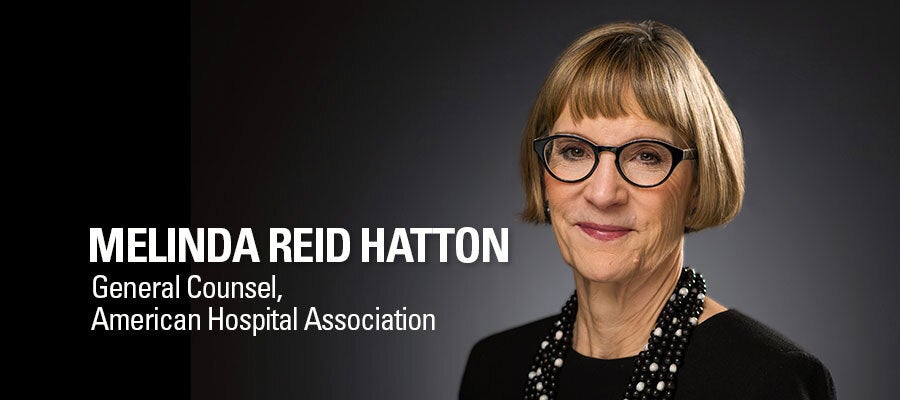
By Melinda Hatton, Aaron Wesolowski, AHA Vice President of Research Strategy and Policy Communications, Benjamin Finder
Hospital mergers are worth discussing, but too often the criticism is far from rigorous and is more like an echo chamber where critics cite those with whom they agree and ignore inconvenient facts that show how the hospital field continues provide quality care in their communities.