

3 Takeaways from Patient Safety Session at AHA Leadership Summit
From plenaries to interactive sessions to podcasts, the AHA’s Patient Safety Initiative had a huge presence at last month’s AHA Leadership Summit. Over three days of spectacular programming, the initiative’s three priority areas – Culture of Safety, Health Equity and Workforce Safety – were all well-represented. Here are just a few examples:
- Culture of Safety – which emphasizes an approach that stretches from board to bedside – included a joint session on board engagement with BJC Health and the Joint Commission.
- Health Equity was the topic of a plenary with AHA’s Senior Vice President of Health Equity Strategies Joy Lewis and Dayna Bowen Matthew, author of “Just Medicine: A Cure for Racial Inequality in American Health Care.”
- Workforce Safety included a session on preventing mass and targeted violence led by Karie Gibson, head of the FBI’s Behavioral Threat Assessment Center.
For me, one of the highlights of the Summit was a session I had the privilege to moderate. It featured a great discussion with AHA Board Member Steve Diaz, M.D., chief medical officer at MaineGeneral Health; Oren Guttman, M.D., the Edward Asplundh chief patient safety and quality officer at Jefferson Health; Nell Buhlman, chief administrative officer and head of strategy at Press Ganey; and Akin Demehin, AHA senior director of quality and safety policy.
While there were many terrific insights shared throughout the session, here are three takeaways:
1. Mind the Interplay among Engagement, Experience and Safety
Buhlman reminded us that the things we measure in health care are rarely independent and frequently more deeply interdependent than we realize. Using data from Press Ganey – one of the Patient Safety Initiative’s core data partners – she showed many correlations between patient and workforce safety measures. Perhaps the most impressive graph demonstrated a 95 percentile-rank-difference between Safety Culture high-performers (who align around the 97th percentile in workforce engagement) and Safety Culture low-performers (who align around the 2nd percentile). These trends persist across numerous domains, driving home just how central safety is to the hospital and health system workforce.
2. Move Your Feet
Diaz spoke from the heart about his team at MaineGeneral and the unique challenges faced in rural health care. He shared the importance that physical leadership presence plays in the midst of an acute patient or workforce safety issue. While today’s workforce is more mobile than ever, during a crisis there is no substitute for “moving our feet.” For Diaz, that sometimes means being in Augusta in the morning and Waterville in the afternoon, but it’s worth it to ensure that his teams feel supported.
3. Reliability and Resiliency Aren’t the Same
Guttman went deep into safety science to show how reliability and resiliency drive separate yet equally necessary aspects of improvement. Hospitals have historically leaned into high reliability, with a focus on optimizing for systems that “get it right the first time” and seek to avoid all error. Resiliency instead expects errors to occur despite any efforts to avoid them, and thus optimizes for systems that can adapt to the inevitable errors and still produce the intended result. Both are crucial to improving safety, and our field’s understanding of how to build adaptive resiliency is steadily growing.
Please visit our Patient Safety Initiative webpage for more information and watch for more resources and programming.
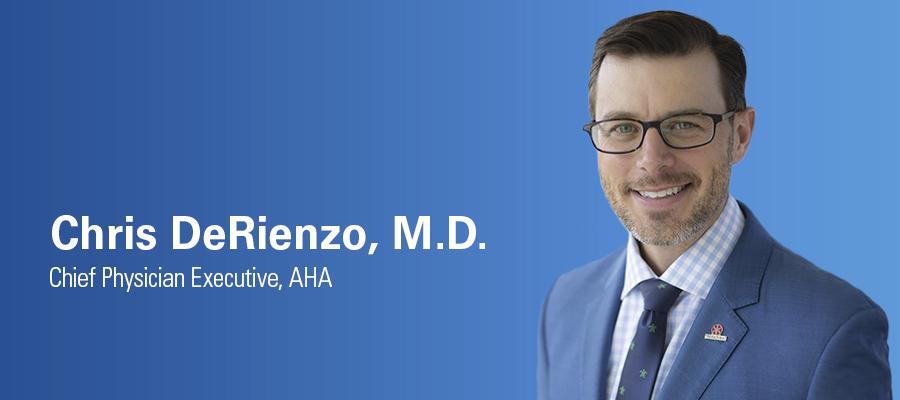
Chris DeRienzo, M.D., is AHA’s Senior Vice President and Chief Physician Executive, and President of AHA’s Health Research and Educational Trust.